






















In the heavy-duty commercial vehicle sector, braking systems are the ultimate line of defense for safety, compliance, and operational efficiency. For European truck parts buyers, distributors, and fleet managers, understanding the technological nuances between ABS (Antilock Braking System) and EBS (Electronic Braking System) is critical. As European commercial vehicles increasingly shift toward advanced electronic architectures, specifying the correct components requires a solid grasp of how these systems function, fail, and how to source the right aftermarket or OE brands.
Ⅰ.Core Definitions and Functions
ABS (Antilock Braking System)
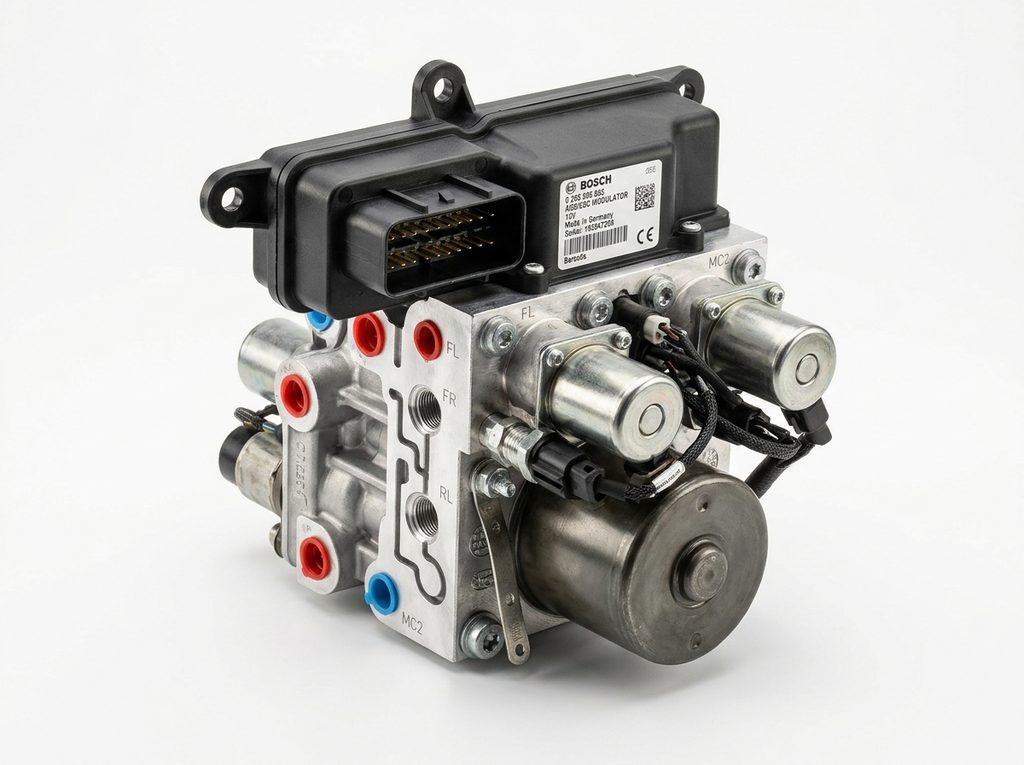
ABS is a pneumatic-mechanical safety system designed to prevent commercial vehicle wheels from locking up during hard braking. By modulating brake pressure at individual wheels via solenoid valves and wheel speed sensors, ABS maintains directional stability and steerability on slippery surfaces.
Primary Role: Prevents wheel lock-up, reduces stopping distance in emergency scenarios, and prevents vehicle skidding or jackknifing.
EBS (Electronic Braking System)
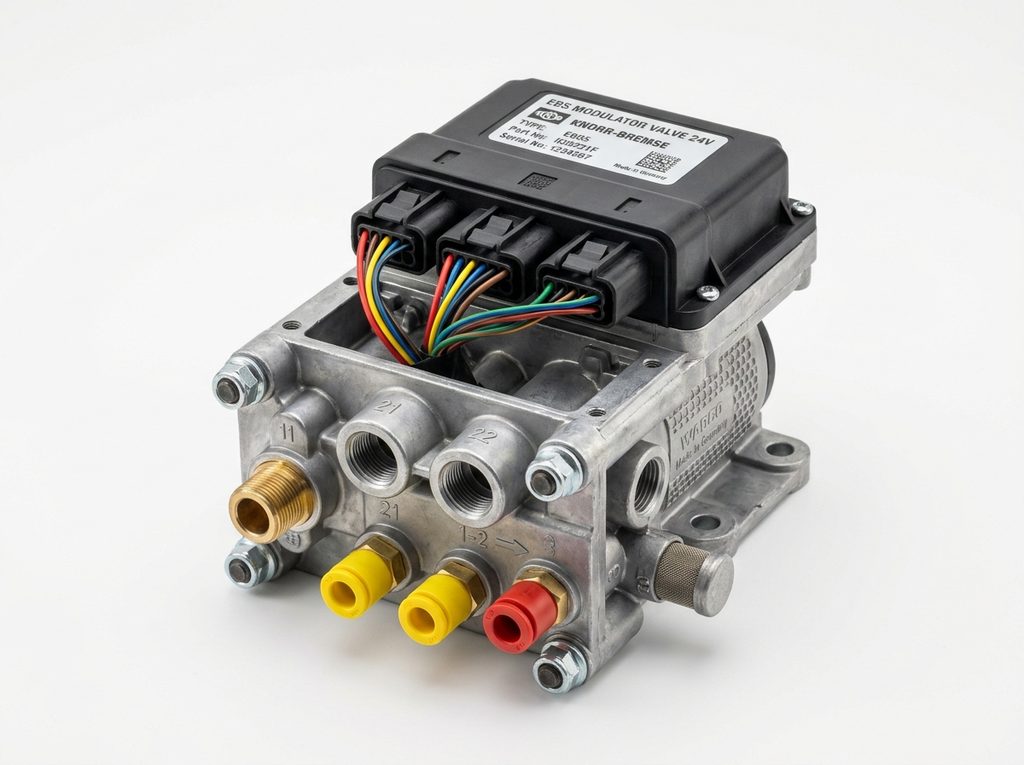
EBS is an evolution of traditional braking technology. It is a fully electronic, computer-controlled braking system where brake commands are transmitted electrically via a CAN bus network rather than purely through pneumatic lines. EBS integrates ABS, Electronic Brake-force Distribution (EBD), Roll Stability Control (RSC), and automated traction control into a single unified architecture.
Primary Role: Delivers instantaneous reaction times, balances braking force dynamically across all axles, optimizes wear, and incorporates advanced vehicle stability features.
Ⅱ.Key Differences: EBS vs. ABS
| Feature | ABS (Antilock Braking System) | EBS(Electronic Braking System) |
| Signal Transmission | Pneumatic/Mechanical with electronic solenoid control | Electronic multiplexed signals (CAN bus) |
| Response Time | Slower (governed by pneumatic propagation speed) | Instantaneous (electronic actuation) |
| System Integration | Standalone safety function | Highly integrated with stability control, retarder, and ECU |
| Wear Equalization | Basic or non-existent | Continuous electronic brake-force distribution for even pad wear |
| Diagnostics | Basic blink codes or standard diagnostic tools | Advanced ECU fault logging, parameter configuration, and live data streaming |
Ⅲ.Common Failure Symptoms and Diagnostics
For parts buyers, recognizing failure symptoms helps in accurately forecasting inventory needs and providing technical support to fleet clients.
ABS Failure Symptoms
●Warning Dashboard Lamp: Continuous illumination of the ABS warning light.
●Lock-up Tendency: Wheels locking up prematurely during heavy braking on low-friction roads.
●Sensor Errors: Intermittent or dead signals from wheel speed sensors, often caused by metallic debris, damaged tone rings, or wiring harness fatigue.
●Modulator Click/Noise: Failure in the pneumatic modulator valves, resulting in erratic pressure release.
EBS Failure Symptoms
●System Fault Messages: Dedicated EBS warning lights or diagnostic messages on the instrument cluster (often disabling secondary systems like hill-start assist or stability control).
●Extended Stopping Distance or Limp Mode: The system defaults to a purely pneumatic backup mode, resulting in heavy pedal feel and reduced braking efficiency.
●CAN Bus Communication Errors: Loss of communication between the central EBS electronic control unit (ECU) and wheel modulators.
●Uneven Brake Pad Wear: Malfunctioning electronic load sensing or pressure distribution leading to premature axle wear.
Ⅳ.How to Select the Right Brands and Components
When sourcing heavy-duty braking components for European trucks (such as Volvo, Scania, Mercedes-Benz, MAN, DAF, and Iveco), brand reputation and technical precision are paramount. Parts buyers should evaluate suppliers based on the following criteria:
1. Prioritize OE and Tier-1 Manufacturers
The European market is dominated by a few key tier-1 braking manufacturers. Ensure your catalog features trusted OE brands:
●WABCO (ZF): Industry pioneer with widespread adoption across major European heavy-duty fleets. Known for robust modular design and high parts availability.
●Knorr-Bremse: Dominates the OE landscape for pneumatic and electronic disc braking systems, offering exceptional reliability and precise engineering.
●Haldex: Renowned for specialized braking and suspension components, particularly strong in trailer braking applications.
2. Verify Part Numbers and Software Compatibility
Unlike mechanical ABS components, many EBS electronic control units (ECUs) and modulators require specific software programming or parameterization matched to the exact vehicle wheelbase, axle configuration, and gross vehicle weight rating (GVWR). Always verify whether a replacement part comes pre-flashed or requires specialized diagnostic software configuration.
3.Assess Supply Chain Reliability and Traceability
Braking system failures lead to immediate vehicle downtime. Sourcing from certified suppliers who guarantee genuine OE or premium aftermarket compliance ensures structural integrity, regulatory compliance (such as ECE R13 standards), and long-term availability of critical replacement units.
Conclusion
For commercial vehicle parts professionals, understanding the transition from ABS to EBS is vital. While ABS remains a reliable standard for older or auxiliary fleets, EBS represents the pinnacle of modern transport safety and efficiency. By partnering with leading OE brands and maintaining high standards for component specification, parts buyers can maximize fleet uptime, safety, and customer satisfaction.
About Us
As a specialized foreign trade supplier in European commercial vehicle and heavy-duty truck parts, SMART-VEHICLE (www.smart-vehicle.cn) provides global B2B wholesalers, distributors, and fleet operators with a comprehensive range of genuine (OE) and premium aftermarket components. Our catalog covers core safety systems—including pneumatic brake valves, ABS/EBS electronic modulators, wheel hub bearings, air spring assemblies, and heavy-duty brake calipers. Driven by extensive inventory, strict quality control, and reliable supply availability, we deliver precise, high-performance braking solutions worldwide.
Contact Us
If you are seeking a trusted partner for European truck parts or wish to request our full catalog and competitive wholesale rates, visit our official website at www.smart-vehicle.cn. We look forward to establishing a mutually beneficial partnership.