
























Description
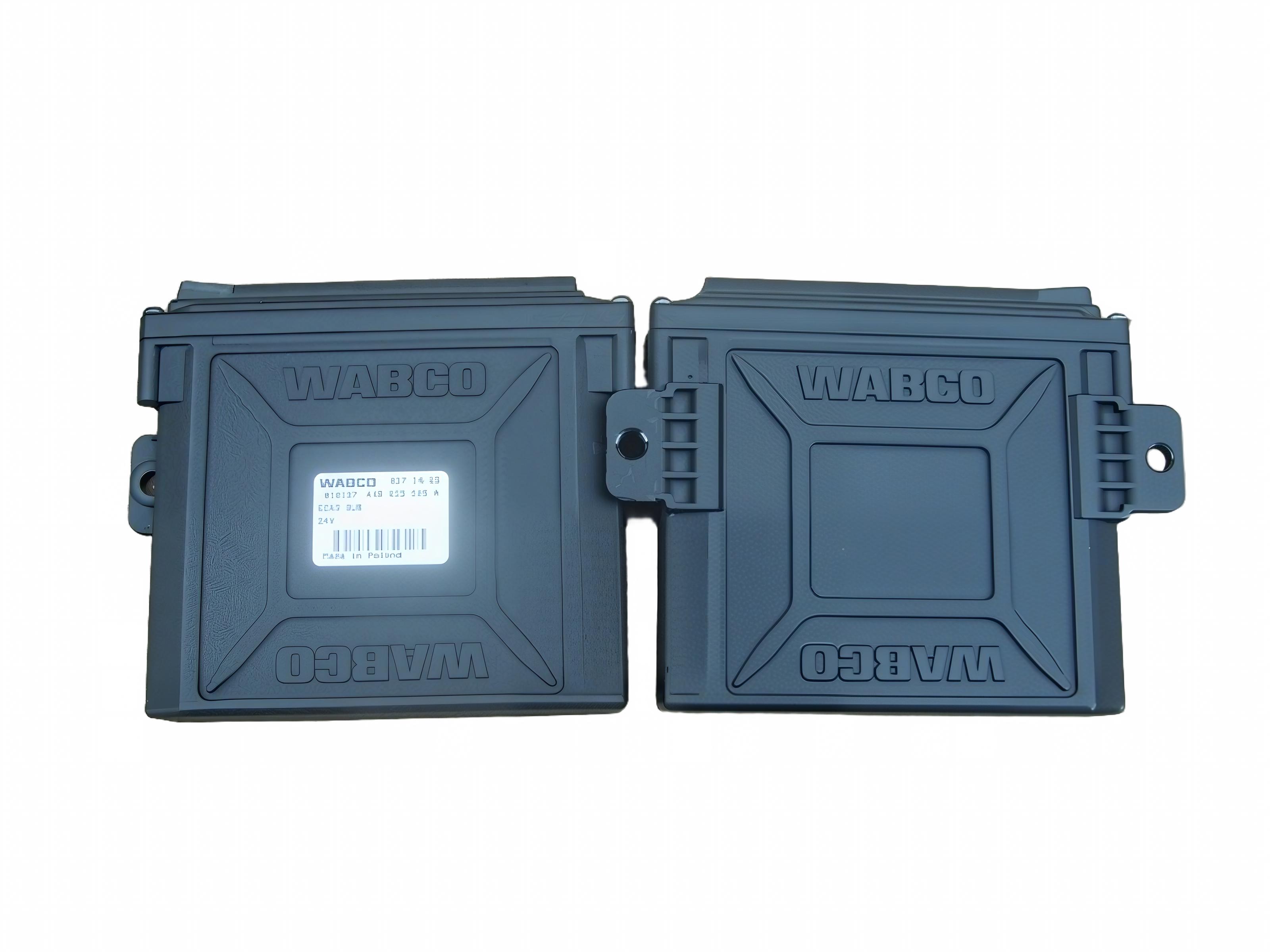
Optimize chassis stability and lower fuel consumption for your commercial transport fleet with the genuine WABCO Commercial Vehicle ECAS (Electronically Controlled Air Suspension) Control Unit & ECU. Engineered specifically for heavy-duty commercial trucks, luxury passenger coaches, and multi-axle freight trailers, this OE-grade electronic control unit serves as the central brain of the vehicle’s air suspension system. Faulty ECAS controllers or damaged ECU modules cause erratic vehicle height adjustments, uneven axle loading, compressor strain, and dangerous chassis tilting during highway transit. This original WABCO ECAS ECU solves those electronic failures directly. It processes real-time sensor signals to deliver dynamic air pressure management, millisecond-fast height leveling, and seamless CAN-bus integration, ensuring maximum driving safety and operational efficiency in demanding commercial operations.
Technical Parameters
| Category | Specifications & Technical Details |
| OEM-Grade CAN-Bus Communication & Diagnostics | We support SAE J1939 and ISO 11898 standard CAN-bus protocols, enabling seamless communication with the vehicle ECU, EBS, and engine control unit. As a result, the system delivers real-time self-diagnostics and remote data reading. |
| Millisecond-Fast Response & Dynamic Height Leveling | We precisely collect height sensor data and drive the solenoid valve group in real time to adjust air spring pressure on each axle. Consequently, the system maintains optimal body posture during high-speed driving, loading/unloading, and harsh road conditions. |
| Multi-Axle Intelligent Load Transfer & Axle Load Monitoring | We automatically calculate and optimize the load distribution ratio across each axle based on real-time vehicle loading weight. Moreover, the system intelligently increases drive axle downforce during wet or slippery starts to boost traction grip. |
| Speed-Sensing Aerodynamic Ride Height Optimization | We automatically lower the body height during high-speed cruising to reduce aerodynamic drag. As a result, this significantly cuts fuel consumption per 100 km and abnormal tire wear on long-haul logistics tractor units. |
| Automotive-Grade Sealed Housing & Thermal Endurance | We build the housing from high-strength flame-retardant engineering plastic and a sealed aluminum alloy enclosure. Consequently, it achieves IP67 / IP69K protection rating, completely blocking mud, oil contamination, and electromagnetic interference. Notably, it withstands extreme environments from -40°C to +85°C. |
Applicable Car Brands & Models
Common warning symptoms include:
ECAS Fault Code / Warning Light on Dashboard: The instrument cluster displays an air suspension system fault code or ECAS amber/red warning icon.
Inability to Adjust Ride Height: The truck or trailer stays stuck in its lowest or highest position and fails to respond to manual remote control or automatic speed leveling.
Uneven Chassis Leveling: The vehicle leans noticeably to one side because the ECU fails to send correct signals to the solenoid valves.
No Response from Manual Remote Controller: The handheld ECAS remote control loses communication with the main ECU.
WABCO (a ZF Group brand) pioneered electronically controlled air suspension technology for commercial vehicles. Genuine WABCO ECAS controllers deliver precision firmware integration, superior electromagnetic compatibility, factory calibration standards, and immediate availability of replacement units for global transport operators.
Yes. After installing a replacement ECAS control unit, a qualified technician must use WABCO diagnostic software (Diagnostic Software / Diagnostic Interface) to flash the vehicle-specific parameter dataset, calibrate the nominal chassis height sensors, and clear legacy fault codes.
The ECAS ECU monitors compressor duty cycles and air reservoir pressure levels. If it detects continuous air leakage or excessive compressor run time, it enters a protective mode to prevent compressor overheating and electrical circuit failure while alerting the driver via the CAN-bus network.