
























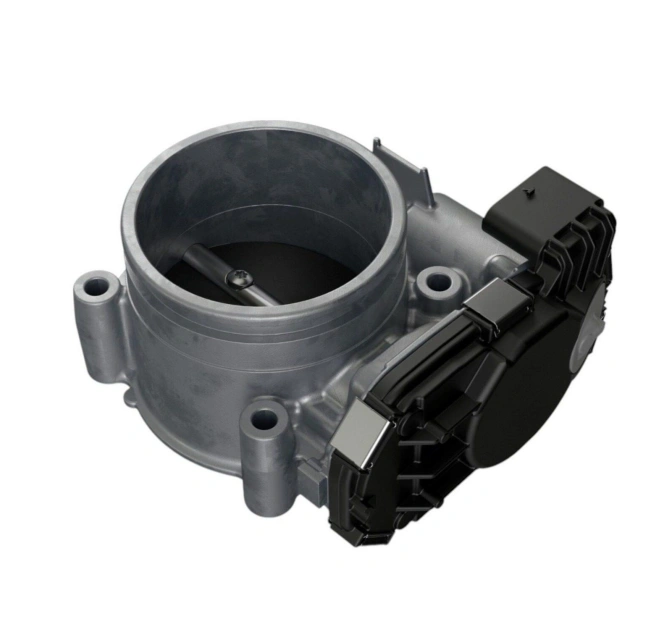
Description
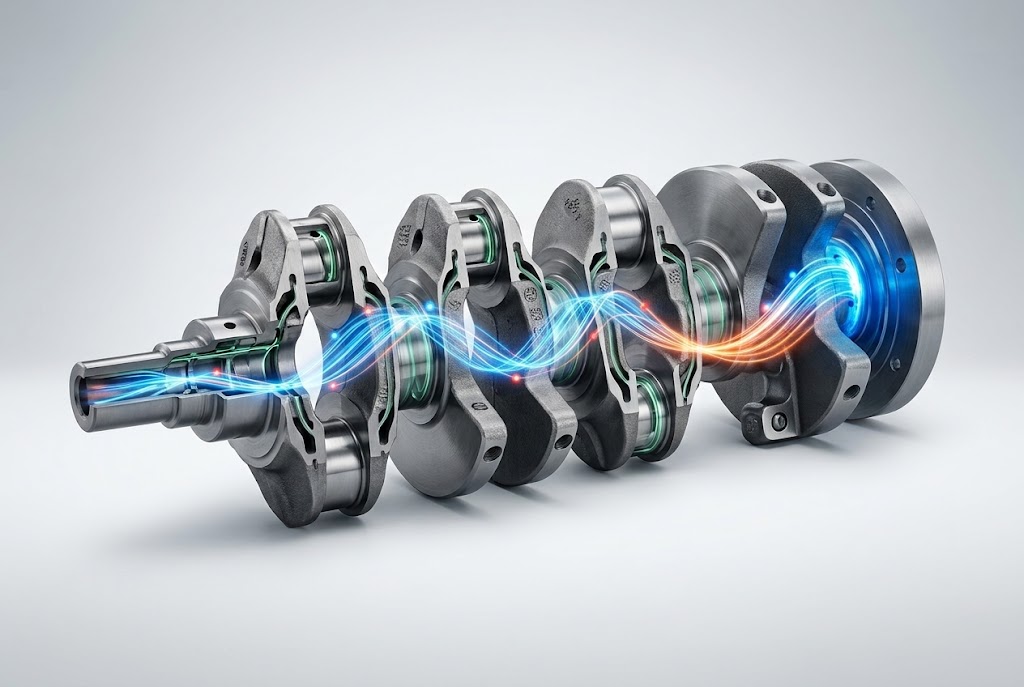
Engineered by INA (a key original equipment manufacturer under the Schaeffler Group), the INA Electronic Throttle Body (ETB) delivers highly responsive, millisecond-accurate air intake control for modern Drive-by-Wire (DbW) engine management systems. Replacing traditional mechanical cable-operated throttles, the INA ETB integrates a high-torque DC electric actuator, a precision gear reduction drive, an integrated contactless Throttle Position Sensor (TPS), and a dynamic throttle valve plate into a compact, die-cast aluminum housing. Controlled directly by the Engine Control Unit (ECU), it continuously adjusts throttle valve angles based on driver pedal inputs, engine load, idle speed requirements, and emissions control strategies. Built to withstand high intake temperatures, severe engine vibrations, and aggressive crankcase oil/carbon vapor exposure, this assembly ensures smooth acceleration, stable idle control, and optimized fuel economy. It is an essential, high-reliability replacement part for specialized repair workshops, engine diagnostic centers, and auto parts importers worldwide.
Technical Parameters
| Category | Specifications & Technical Details |
| Dual-Channel Non-Contact Hall Effect TPS Sensor | Built-in dual-channel redundant Hall effect sensors directly detect the true throttle plate opening angle through magnetic field induction. Compared to traditional potentiometer contacts, the non-contact design completely eliminates sliding wear. Sensor output voltage linearity error versus valve opening is below ±0.5%, greatly improving data reliability and avoiding fault codes caused by displacement sensor aging. |
| High-Torque DC Actuator & Dynamic Response Time | Integrates a micro high-magnetic DC servo motor with a precision reduction gear set. Valve response time from fully closed (0°) to fully open (90°) is less than 50 ms. The ultra-fast response capability allows the engine to rapidly supplement intake air the instant the pedal is pressed, completely eliminating electronic throttle lag. |
| Fail-Safe Dual Return Spring Mechanism | Equipped internally with mechanical dual return springs. When encountering vehicle power loss, signal interruption, or ECU-triggered safety protection mode, the return springs force the throttle plate back to a fixed “Limp Home” preset safety angle (typically 5° to 7°) within milliseconds. This prevents uncontrolled vehicle surging while ensuring the engine maintains basic idle to drive to a safe area. |
| Precision CNC-Machined Bore & Ultra-Low Air Leakage | The throttle body inner wall and shaft plate are CNC precision-machined with micron-level fit tolerances. In the idle closed position, parasitic air leakage at the valve edge is controlled at an extremely low level (typically less than 1.5 kg/h), ensuring stable air-fuel mixture concentration during cold start and idle conditions, preventing idle hunting or shaking. |
| Die-Cast Aluminum Housing & High-Grade Seal Isolation | The throttle body utilizes a high-strength die-cast aluminum housing. The motor and electronic circuit compartment have an extremely high sealing rating (compliant with IP6K9K specifications). It blocks carbon deposit and oil contamination backflow from the positive crankcase ventilation (PCV) system, and resists thermal cycling shock and thermal radiation from -40°C to +140°C. |
Applicable Car Brands & Models
Typical symptoms of a faulty electronic throttle body include:
Check Engine Light / EPC Light: Illumination of the Check Engine Light or Electronic Power Control (EPC) indicator on the dashboard.
Rough or Fluctuating Idle: Engine idling is erratic, surging up and down, or stalling when coming to a stop.
Limp Home Mode / Hesitation: Sudden loss of power accompanied by throttle non-responsiveness (engine restricted to low RPMs for safety).
Poor Fuel Economy & Jerky Acceleration: Hesitation during acceleration or uneven power delivery caused by delayed throttle plate movements.
Yes, absolutely. After replacing the electronic throttle body, an ECU Throttle Adaptation / Relearn procedure must be performed using a diagnostic scan tool (or via the vehicle-specific manual relearn sequence). This allows the Engine Control Unit to clear old learned carbon offsets and store the exact stop positions ($0\%$ closed and $100\%$ open) of the new throttle body.
Yes. Carbon deposits from PCV oil vapors can stick to the throttle bore and plate, binding the mechanical movement and causing electronic motors to overheat or fault. INA electronic throttle bodies feature precision-coated internal bores and high-torque electric actuators that resist carbon sticking and ensure long-term smooth operation.
INA Electronic Throttle Bodies are packaged individually in authentic Schaeffler INA branded protective cartons, sealed in anti-static moisture-proof bags with protective plastic covers shielding the aluminum mounting face and connector pins. Export MOQs start at 5 to 10 units per part number, with flexible shipping options available for consolidated distributor orders.