
























Description
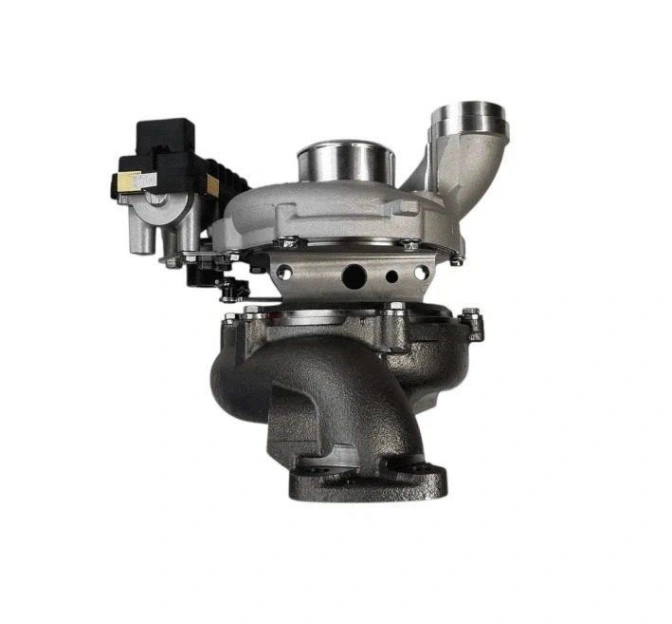
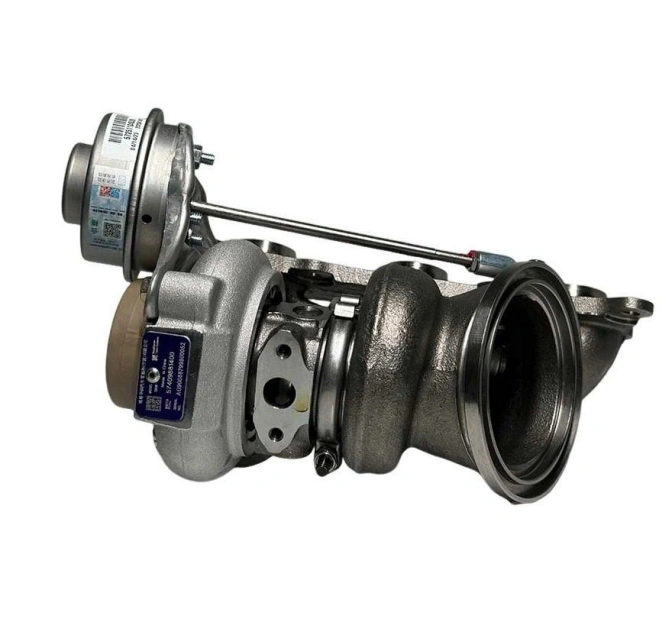
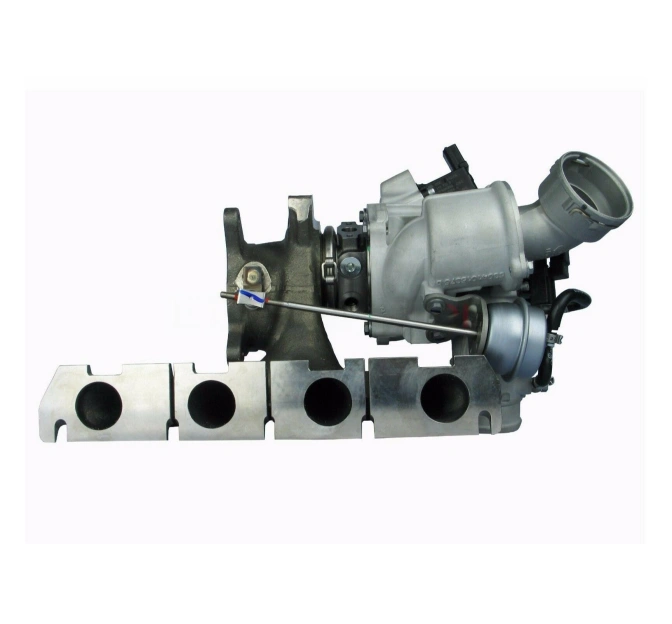
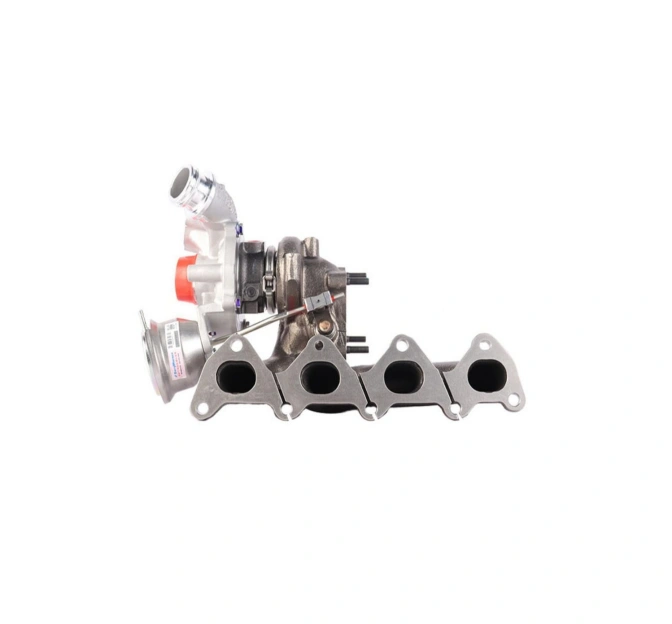
Engineered to match Audi’s demanding OEM performance, luxury refinement, and stringent thermal efficiency standards, the BorgWarner Turbocharger with Integrated Exhaust Manifold represents an advanced structural solution for premium turbocharged engines. By cast-integrating the turbine housing directly into the stainless steel or high-nickel exhaust manifold, this single-piece architecture eliminates external mating flanges and seals, completely removing common failure points caused by exhaust gas leaks and thermal stress warping. Custom-tuned for Audi’s widely acclaimed EA888 (1.8 TFSI / 2.0 TFSI) and EA211 (1.4 TFSI) longitudinal and transverse powertrains, this complete BorgWarner assembly minimizes exhaust heat radiation losses, dramatically reduces turbo lag, and accelerates boost pressure response at low engine speeds. Equipped with a high-precision billet compressor wheel, a fast-acting smart electronic wastegate actuator, and low-friction bearings, it fully restores factory throttle responsiveness, fixes oil-consumption issues, and maintains full compliance with Euro 6 / EPA emissions regulations. It is a vital, high-grade replacement unit for Audi specialists, international auto parts distributors, and specialized engine rebuilders.
Technical Parameters
| Category | Specifications & Technical Details |
| Integrated Exhaust Manifold & Turbine Housing Structure | This design casts the exhaust manifold (exhaust runner) and turbine housing directly into one complete unit, eliminating the traditional mounting flange and gasket between them. This structure not only fundamentally eliminates common exhaust leakage issues under high temperature and pressure, but also shortens the exhaust gas flow path, allowing exhaust gas to carry more thermal energy directly to drive the turbine — greatly improving engine acceleration response at low RPM. |
| High-Nickel Austenitic Steel Material | Utilizes 1.4837 (D5S) grade extreme high-temperature resistant high-nickel alloy cast steel. Since Audi TFSI gasoline direct injection engines can easily exceed 980°C or even reach 1,050°C exhaust temperatures during high-speed driving or high-load output, this special metal material ensures the integrated manifold and turbine housing do not deform, crack, or suffer internal spalling under repeated severe thermal expansion and contraction — ensuring long-term airtightness and mechanical strength. |
| Smart Electronic Wastegate Actuator | Features a stepper motor electronic actuator that directly interfaces with the Audi ECU (Engine Control Unit). Open/close response time is under 80 milliseconds, with valve positioning accuracy reaching ±0.2 mm. It replaces outdated vacuum canister control and can fine-tune the exhaust bypass valve within milliseconds according to vehicle driving modes. During hard acceleration, it rapidly builds boost to eliminate lag; during cruising, it opens the bypass valve to reduce engine exhaust resistance — balancing strong power with low fuel consumption. |
| 5-Axis CNC Forged Billet Compressor Wheel | The compressor wheel is precision-machined from high-strength aluminum alloy using 5-axis CNC milling, featuring thinner blade edges and lighter rotational weight (low rotational inertia). Maximum design speed can exceed 200,000 rpm. While withstanding pressure ratios above 2.8, it broadens the high-efficiency operating range of the intake map, allowing the engine to continuously receive abundant airflow at mid-to-high RPM. |
| Micro-VSR Dynamic Balancing & Journal Bearing System | The turbo shaft assembly uses copper-based journal bearings with a 360° reinforced thrust bearing. Before leaving the factory, it must pass micro-level VSR (Vibration Sorting Rig) high-speed dynamic balancing testing, with residual unbalance controlled below 0.4 g·mm. Ultra-high balancing precision eliminates abnormal noise and micron-level runout during high-speed turbine rotation, effectively protecting oil seals and preventing oil from seeping into the intercooler or entering the exhaust catalytic converter. |
Applicable Car Brands & Models
Audi adopted this design to achieve three main goals:
Reduced Warm-Up Time: Heat from the exhaust is transferred more efficiently, helping the engine and catalytic converter reach optimal operating temperatures faster for lower cold-start emissions.
Enhanced Durability: Removing the gasket and flange between the manifold and turbo housing eliminates common points of exhaust leakage.
Better Throttle Response: A shorter exhaust distance provides immediate gas flow to drive the turbine with minimal energy loss.
Common warning signs include:
A sudden “EPC Light” or “Check Engine Light” with iDrive/Diagnostic boost codes (e.g., P0299 Underboost or P0234 Overboost).
Metallic rattling or whining sounds during acceleration (often caused by wear in the electronic wastegate linkage or shaft imbalance).
Excessive blue exhaust smoke and high oil consumption due to degraded internal shaft oil seals.
Because this is a direct-fit OEM replacement assembly, custom ECU software tuning is not required. However, using a diagnostic tool (such as ODIS or VCDS) to perform an “Electronic Wastegate Adaptation/Zero-Point Adjustment” is highly recommended to sync the new electronic actuator’s positioning with the Audi engine control software.
BorgWarner turbocharger assemblies are shipped individually in heavy-duty, multi-layer corrugated boxes with high-density custom foam enclosures to prevent shipping damage. Wholesale export MOQs start at 2 to 5 units per order, with typical dispatch handling within 3 to 7 business days for in-stock distribution centers.