
























Description
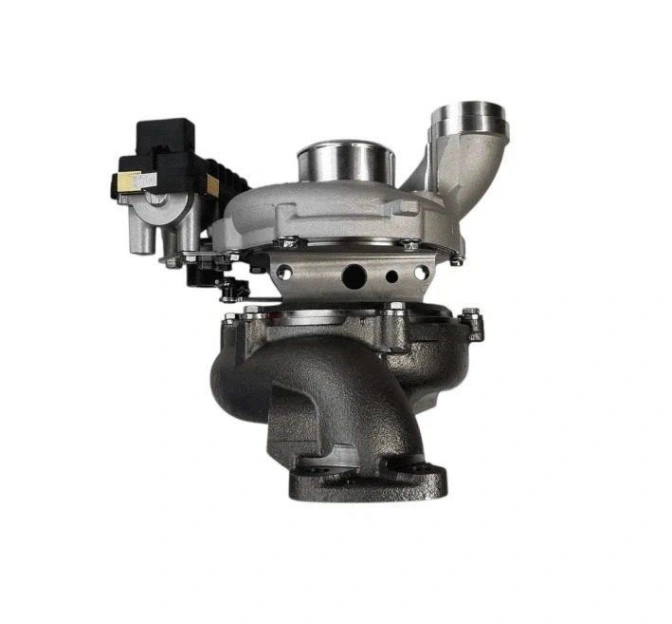
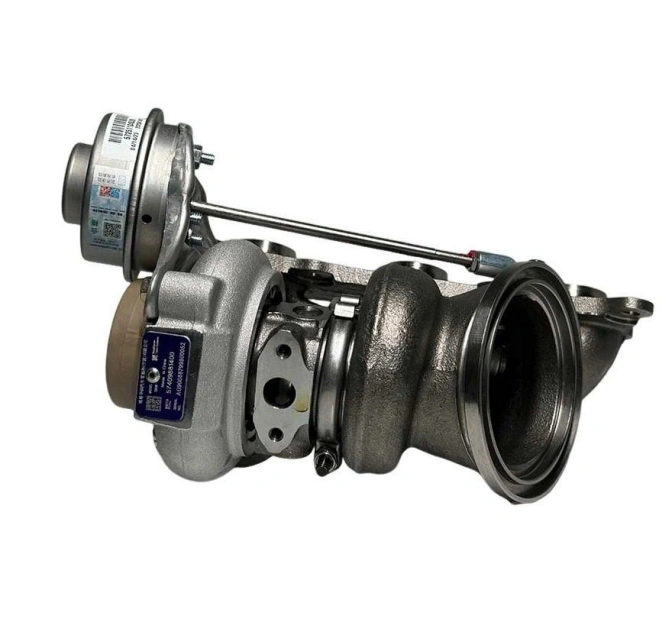
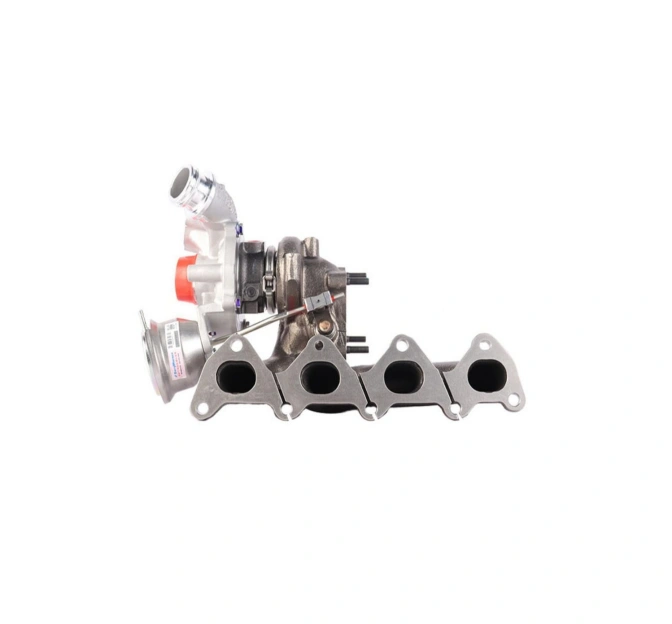
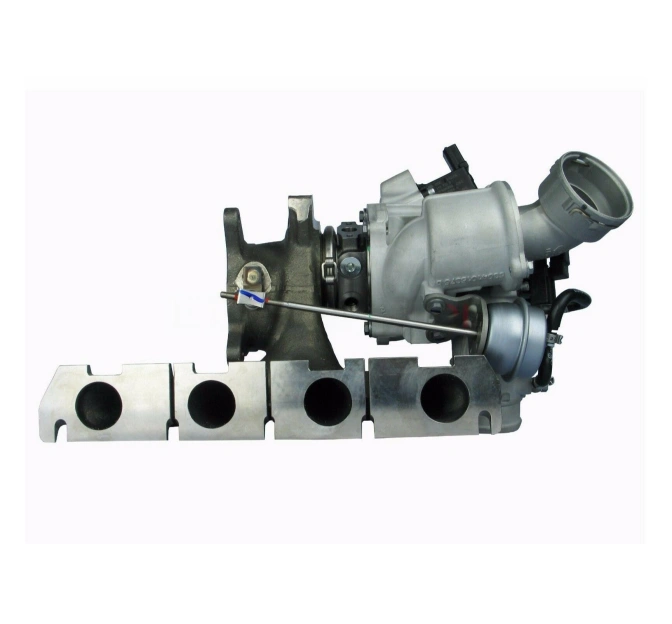
This BorgWarner turbocharger with integrated exhaust manifold is engineered as an OE-grade replacement for Volkswagen TDI diesel engines. The turbocharger and exhaust manifold are cast into a single assembly, restoring the original exhaust routing and mounting geometry of the factory unit and eliminating the sealing-surface misalignment and leaks that can occur with two-piece designs.
Technical Parameters
| Category | Specifications & Technical Details |
| Variable Nozzle Turbine (VNT) Technology | Internal vanes inside the turbine housing adjust their angle in response to engine speed. At low RPM the vanes narrow to speed up exhaust flow and sharpen throttle response; at high RPM they open to reduce back-pressure. This VNT design delivers consistent boost across a wider RPM range than a fixed-geometry turbo, improving low-end torque and fuel economy. |
| Integrated Cast Exhaust Manifold | The turbocharger and exhaust manifold are cast as a single unit, eliminating the extra flange and gasket layer required by two-piece designs. The manifold is made from heat-resistant cast iron that withstands the sustained high exhaust temperatures of a diesel engine without warping. |
| Dual Water-and-Oil Cooled Bearing System | The center bearing housing draws from both the engine’s oil circuit for lubrication and its coolant circuit for heat dissipation. This dual-cooling design reduces heat-soak damage to the bearings, including during the residual-heat period right after the engine is shut off, extending turbocharger service life. |
| Pneumatic or Electronic Actuator Control | Depending on the specific vehicle application and model year, the unit is equipped with either a vacuum-diaphragm actuator or an electronic actuator that receives boost commands from the ECU to precisely control the VNT vane angle. Confirm the actuator type matches your factory unit before ordering. |
| OE-Matched Mounting Dimensions and Ports | Flange bolt patterns, oil inlet and outlet ports, coolant line connections, and boost pipe diameters are reproduced to factory specifications. This allows direct, bolt-on installation with no cutting or modification, preserving the original sealing performance and boost response. |
Applicable Car Brands & Models
The main benefits include:
Zero Leakage Risk: Eliminates the gasket between the manifold and turbine housing, preventing exhaust leaks.
Faster Response: Shorter exhaust path reduces thermal energy loss, helping the turbo build boost quicker.
Weight & Space Savings: Provides a compact design that fits neatly into tight engine compartments while reducing overall front-axle weight.
Key warning signs include a loss of power or “Limp Mode” under acceleration, a high-pitched metallic whistling noise, excessive blue or gray exhaust smoke (caused by oil passing through turbine seals), high engine oil consumption, or check engine light (CEL) codes such as P0299 (Underboost Condition) or P0234 (Overboost Condition).
Yes, absolutely. During installation:
1.Always install new cylinder head exhaust gaskets, lock nuts, and copper crush washers.
2.Replace the turbo oil feed line (carbon buildup inside old lines can choke oil supply and destroy new bearings within minutes).
3.Change the engine oil and oil filter, and manually prime the turbo oil inlet with clean oil before the initial engine startup.
Because the integrated manifold creates a larger and heavier casting, units are individually packed in heavy-duty reinforced corrugated cartons with custom shock-absorbing foam molds. Wholesale export MOQs typically start at 2 to 5 units, with dispatched lead times between 3 and 7 business days for in-stock distribution centers.